Hey friends,
Thanks for all of the positive feedback on last week’s inaugural email of the year. Mighty good to hear that the resources we dig up are still helpful.
Though I’ve already been back to the building, all of our staff report for duty on Monday. I’m quite excited to see folks and catch up a bit. Here’s a sneak peek at a welcome back merch idea. Hat Bar!
If this was the first week back for either staff or students (or both 😳), I hope it went splendidly for you.
Quite a few folks took the first-ever Monthly Admin Survey. Very cool and I’m super excited to share the results with you. If you didn’t get the chance, please do take a quick moment and submit your thoughts. I think the more folks that participate the better the quality of the results for everyone. Thanks so much!
I hope you find this week’s resources useful. A very heartwarming video about the power of one kiddo who seeks connection. And, of course, we’re talking more classroom routines in this week’s Emailable PD.
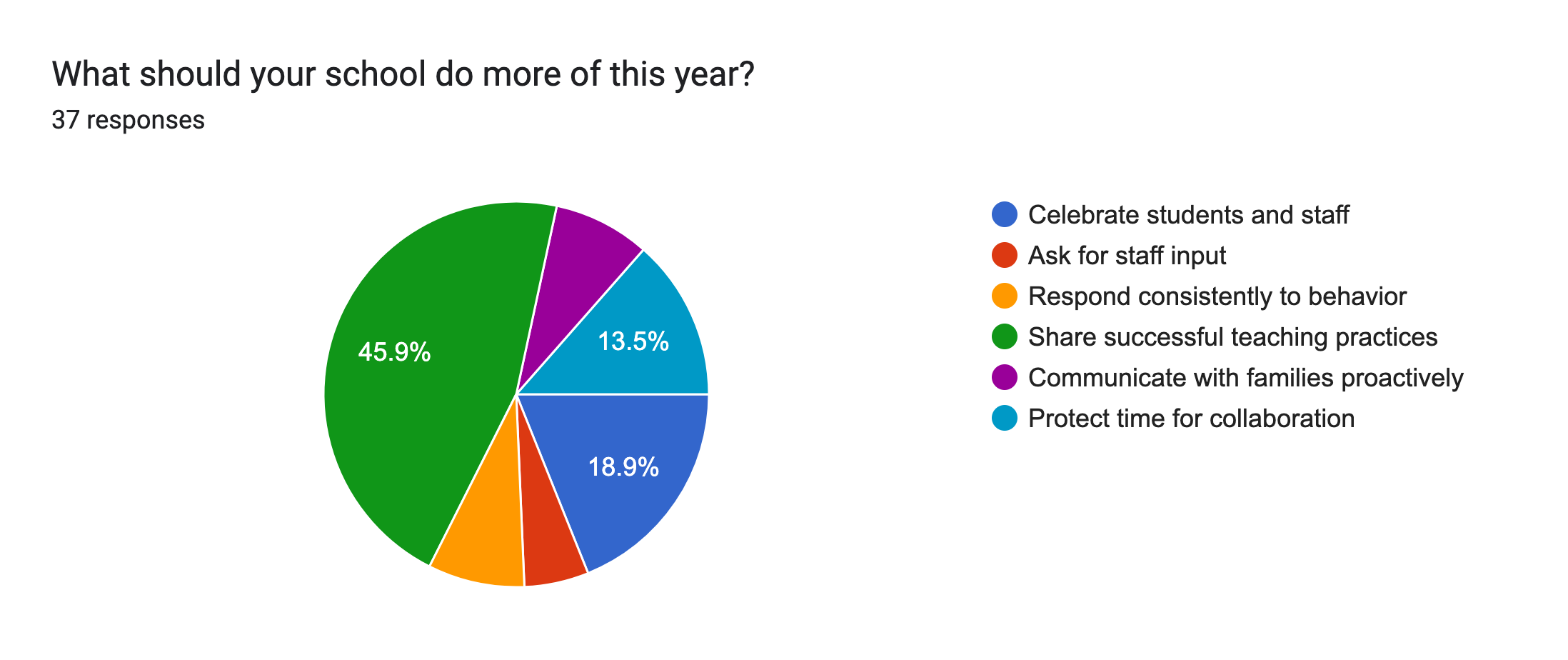
Quick survey spoiler alert: When answering the question “What should your school do more of this year?” the top answer was abundantly clear: Share successful teaching practices. And here comes the shameless plug …
One thing we try to do with our Emailable PD is to share such successful teaching practices in bite-sized, accessible chunks. And you won’t have to hear, “This could’ve been an email” because it is an email!
So, if that’s your goal this year, consider accessing our Emailable PD archives (paid subs only) for two years of PDFs available immediately, along with our weekly dose of new material
I promise I didn’t plant that question to endorse my own resources … but the confirmation is nice!
This week, remember to go out of your way to make a new student or new staff member feel exceptionally welcome in your building. That’s the challenge I’m setting for myself.
Have a great week!
Weekly Video
Use in staff newsletters, encouraging emails, etc.
Four-year-old heals “inner lonliness by bringing his neighborhood together
Possible Caption: Never underestimate what can grow out of one small, consistent act of connection.
Vote below, and we’ll track your favorite videos in our archive.
Looking for a past video. Check our archive.
Monthly Admin Survey
Gain insights from your admin peers around the country
Last week, we had about 40 people take our monthly admin survey. If you haven’t taken it yet, give it a whirl. I’ll share the results next week!
Weekly Quote
"Negative energy is wasted energy. You want to become a master at overcoming hard moments. That is, to me, the sign of a champion."
Roger Federer
Weekly Staff/Student Discussion Question
Use in a staff meeting, student discussion, ask your own kids … see what happens!
This is my favorite new segment. I ask students crazy questions all the time. We do it in a structured way every Friday, and every student is required to answer. I thought kids would hate it. For several years, it’s been the highlight of the week for some of my most disengaged students. Try it at a staff meeting as well. It works! Connection is the key!
Question: What is the most unlikely food combination that you absolutely love?
If you have one, hit “comment” at the bottom of this post and share yours! Mine: grilled cheese sandwiches and ketchup
Weekly Emailable PD
Use in staff newsletters, emailable PD messages, etc.
Suggested Email Body:
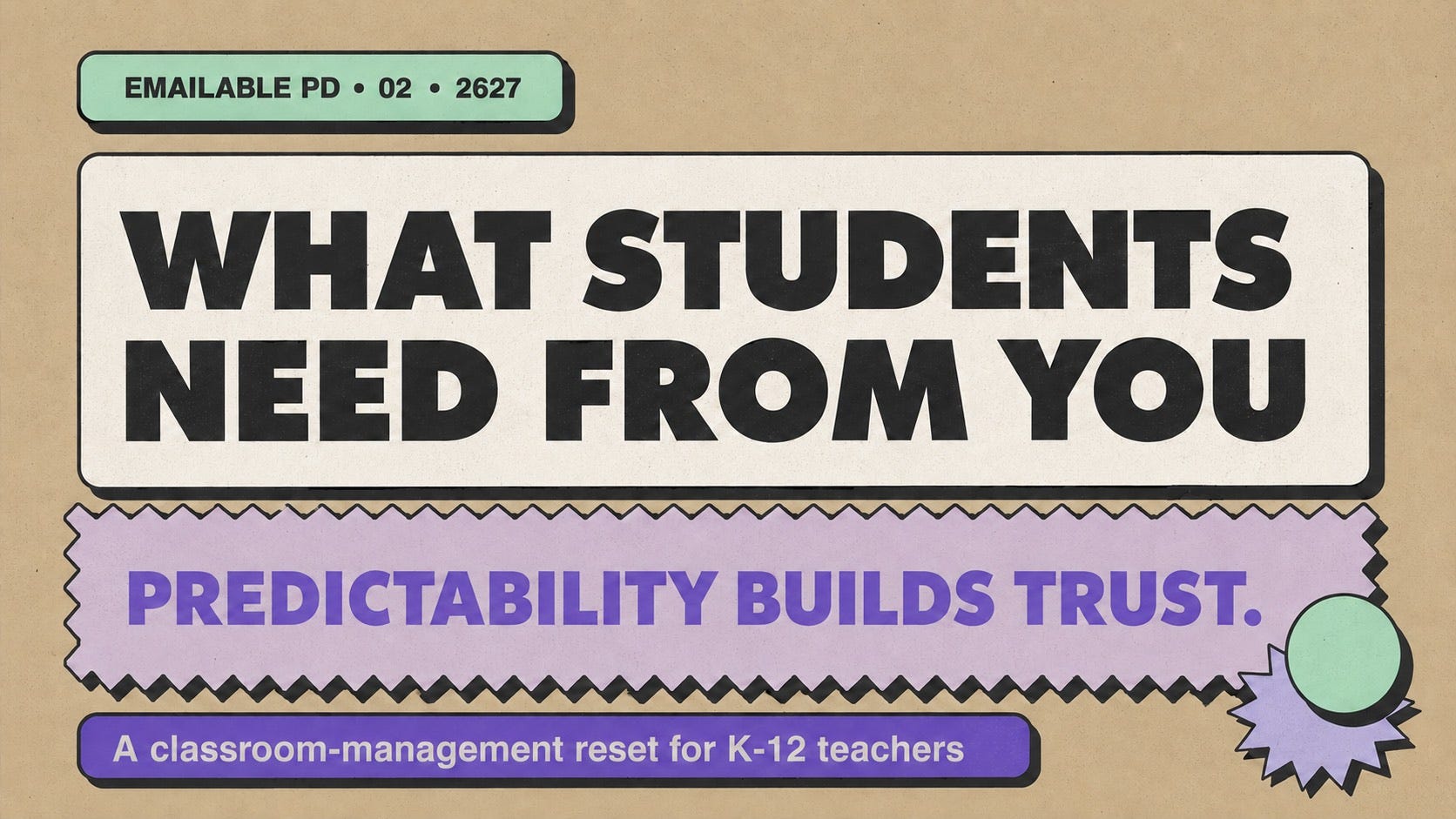
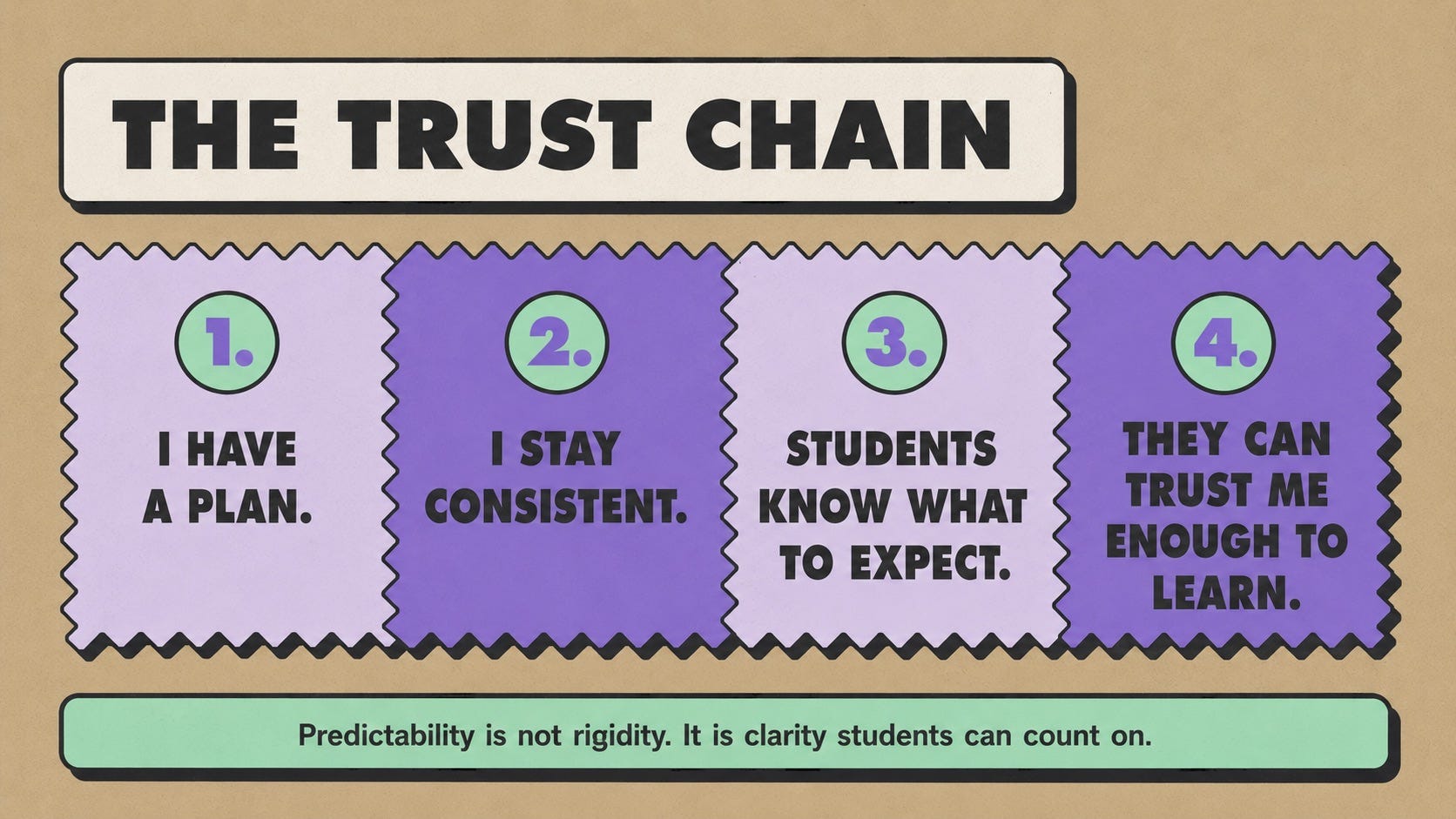
This week’s resource focuses on an essential ingredient in a well-managed classroom: predictability. When students understand what to do, how to do it, and what will happen next, they can spend less energy navigating uncertainty and more energy engaging in learning.
The challenge is not simply establishing routines, but teaching and maintaining them with consistency. By naming expectations, explaining their purpose, modeling them clearly, and providing opportunities to practice, teachers can build trust without becoming rigid.
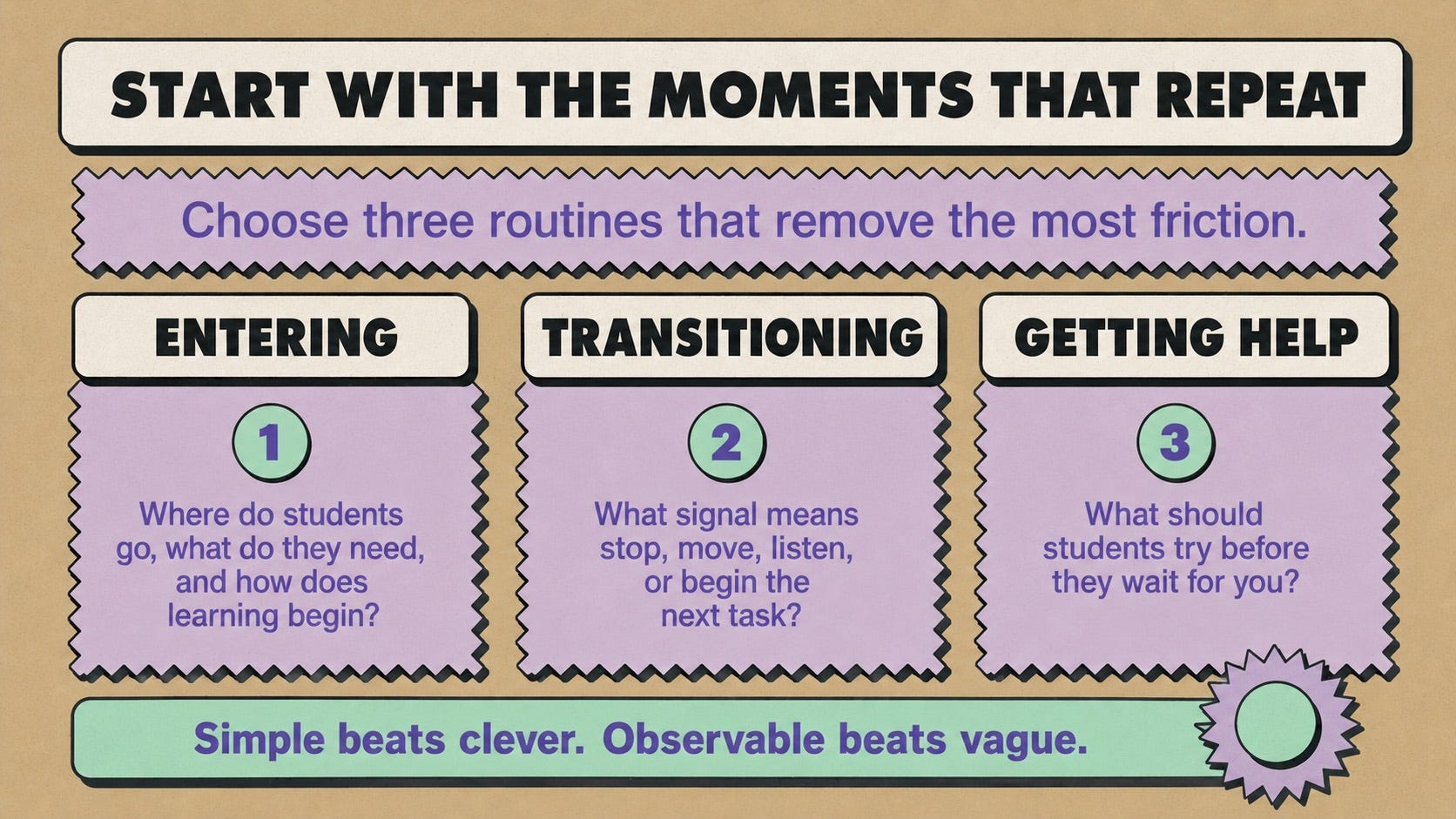
This week’s resource offers a practical approach: identify the moments that create the most friction, explicitly teach the routines students need, and calmly reteach them when they begin to slip. Over time, these predictable structures can create calmer classrooms where students feel secure, capable, and ready to learn.