Hi folks,
Hope you all had a solid week. It’s important work that we do, and rest is equally important. Hopefully you’re enjoying some right now!
The name of the game this week felt like improv. Something would be planned, it would go haywire, and folks were left scrambling. Some weeks come off without a hitch, and some feel like you’re rewriting the plan every five minutes. Regardless of the week you had, I thought I’d share this fun video of someone beautifully pivoting on the fly. So many goosebumps.
We’ve got some fun resources on deck this week. Please take the Monthly Admin Survey! This one is all about AI and tech use. I think the feedback will be very informative for all.
And check out this week’s Emailable PD. It’s all about the downsides of the whole-class consequence - if any of your teachers need a reminder. (Not me, no, no, no.)
Have a great week!
Weekly Video
Use in staff newsletters, encouraging emails, etc.
Possible Caption: Keep striving to do new things.
Vote below, and we’ll track your favorite videos in our archive.
Looking for a past video. Check our archive.
Monthly Admin Survey
Gain insights from your admin peers around the country
Here we go! We’re talking AI, phones, and tech in your school. Share your insights and I’ll share the results in a couple weeks. Thanks so much!
Weekly Quote
"The reward for work well done is the opportunity to do more."
Jonas Salk
Weekly Staff/Student Discussion Question
Use in a staff meeting, student discussion, ask your own kids … see what happens!
Question: You just won a lifetime supply of the thing you purchased most recently. How do you feel?
Weekly Emailable PD
Use in staff newsletters, emailable PD messages, etc.
Suggested Email Body:
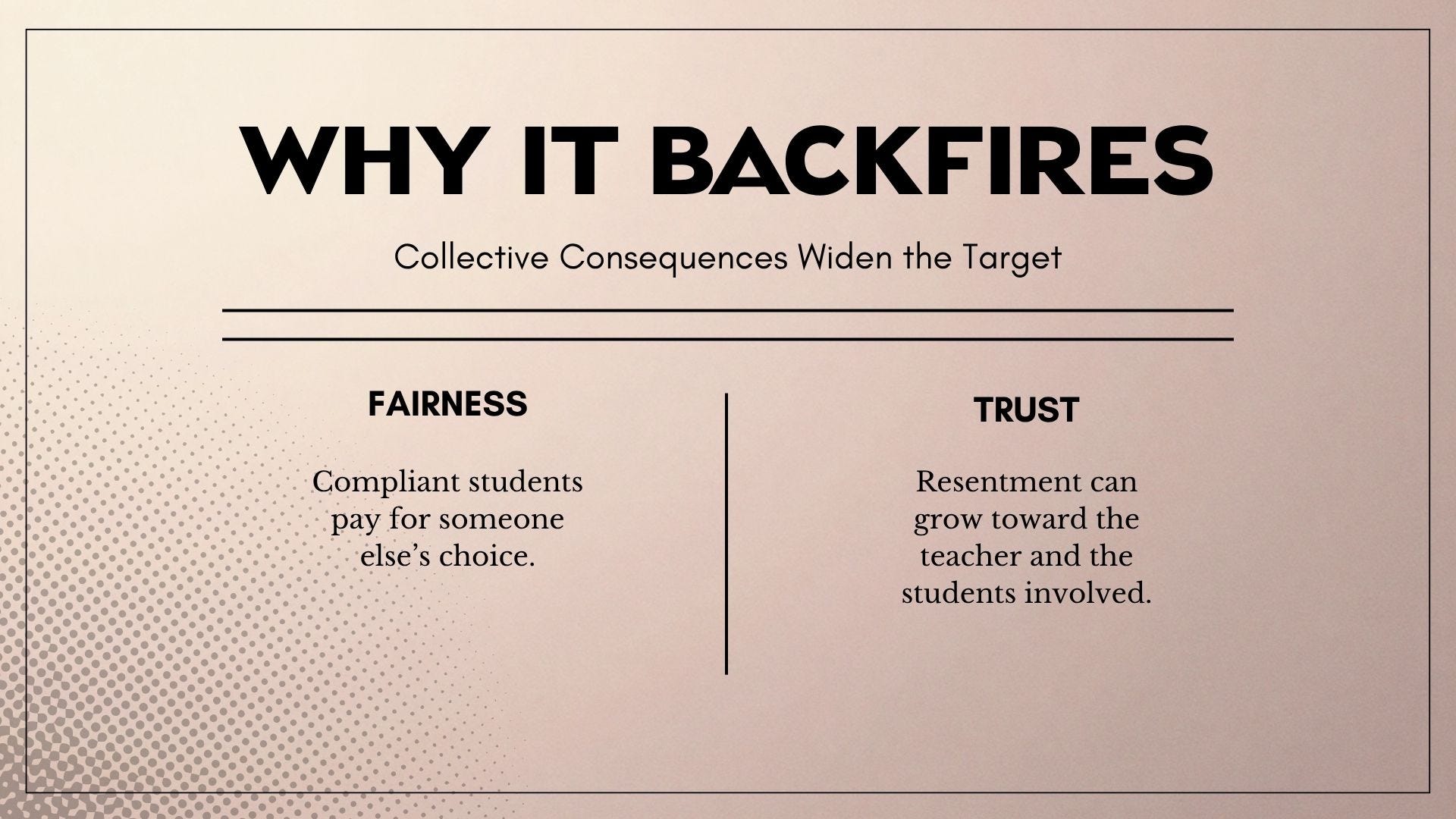
This week’s resource focuses on a common classroom management misstep: responding to one student’s behavior with a consequence for everyone. While collective consequences may feel efficient in the moment, they can frustrate students who were meeting expectations and weaken trust across the class.
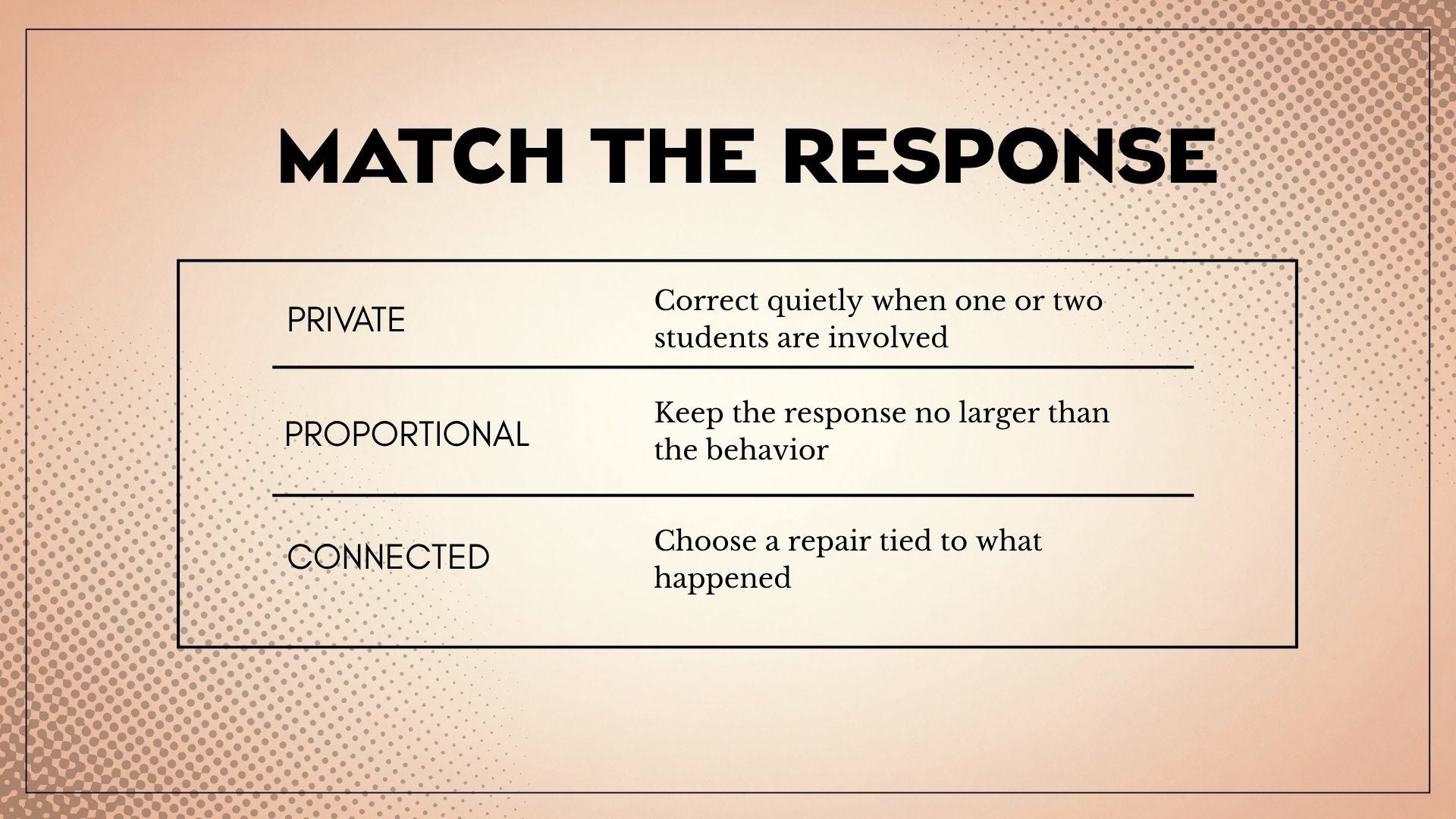
The challenge is not ignoring behavior, but matching the response to the students involved. Quiet, proportional, and connected corrections allow teachers to address the problem directly without widening its impact or creating unnecessary resentment.
These slides offer a simple framework for responding fairly and effectively. By correcting privately, keeping the response proportional, and assigning a repair connected to what happened, teachers can reinforce accountability, protect relationships, and keep learning moving forward.